- Engraved and posted within 1-2 business days
- Engrave your medal
- Support cancer research


Camino Francés Medal
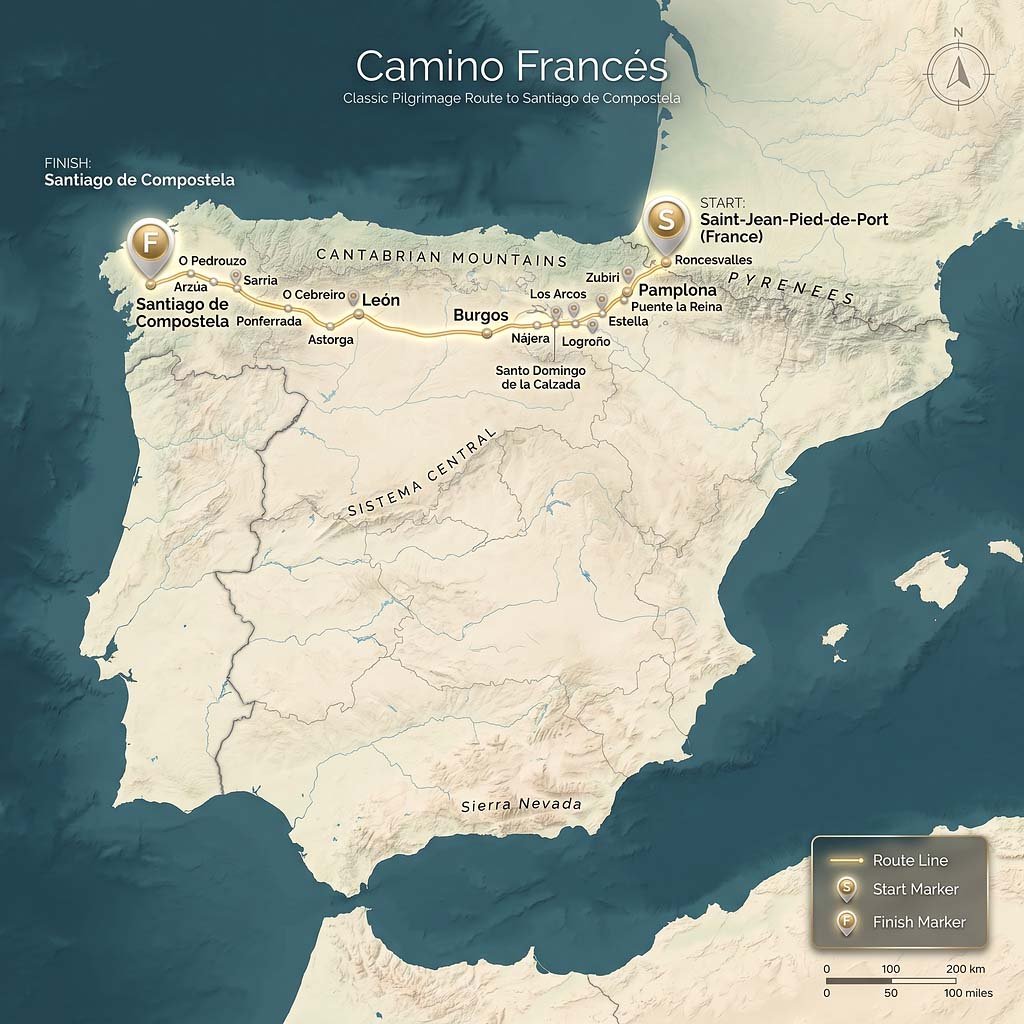
The Camino Francés is the most famous pilgrimage route to Santiago de Compostela and is often regarded as the classic Camino.
Length:
780 km
Start:
Saint-Jean-Pied-de-Port (France)
Finish:
Santiago de Compostela (Spain)
Difficulty:
Average
Average walking time:
30 - 35 days
Highlights
The impressive crossing of the Pyrenees
Historic cities such as Pamplona, Burgos, and León
The green forests and hills of Galicia
The lively Camino atmosphere with many pilgrims and albergues
Camino Francés: the most famous pilgrimage route to Santiago de Compostela
The Camino Francés is undoubtedly the most famous pilgrimage route to Santiago de Compostela. Every year, hundreds of thousands of walkers from all over the world travel this historic route, which runs through northern Spain and ends at the imposing cathedral of Santiago de Compostela. The route combines nature, culture, history, and a personal challenge in a way that few other walking tours can match.
Where does the Camino Francés begin?
The traditional Camino Francés begins in the French mountain town of Saint-Jean-Pied-de-Port, at the foot of the Pyrenees. From here, pilgrims cross the mountains into Spain via the famous pass at Roncesvalles. This first stage is immediately one of the most impressive of the entire route, offering spectacular views of the Pyrenees.
From Roncesvalles, the route winds westward through Navarra, La Rioja, Castile and León, and finally Galicia, arriving in Santiago de Compostela after approximately 780 kilometers.
Order the medal
15 in stock
Donation AVL Foundation
By purchasing this medal, you are making a €5.00 donation to the AVL Foundation!
Which provinces does the Camino Francés run through?
During the journey, you traverse several Spanish provinces:
- Navarra
- La Rioja
- Burgos
- Palencia
- León
- Lugo
- A Coruña
These provinces are spread across four autonomous regions: Navarra, La Rioja, Castile and León, and Galicia. As a result, you experience a wide variety of landscapes, dialects, architecture, and culinary traditions along the way.
A route full of variety
What makes the Camino Francés so special is its enormous variety. You walk through mountainous areas, vast grain fields, historic cities, medieval villages, and green Galician hills. Along the way, you meet people of all ages and nationalities, each with their own reason for undertaking the journey.
More than a walking route
Many people start the Camino Francés for the sporting challenge or out of curiosity about the history. But often, they discover something else along the way: the simplicity of daily walking, the encounters with fellow pilgrims, and the rhythm of the route ensure that for many, the Camino becomes much more than just a hike.
Perhaps that is the greatest secret of the Camino Francés: you set out to reach a destination, but ultimately, the journey itself turns out to be the most beautiful part of the adventure.
Interesting cities and places along the route
One of the first major cities along the route is Pamplona, the capital of Navarre and known worldwide for the annual San Fermu00edn Festival, best known for its traditional running of the bulls. The city has a charming historic centre, centuries-old city walls and lively squares. For many pilgrims, Pamplona is a great place to pause for a while and explore the city.
This charming town is known for its beautiful medieval bridge over the River Arga, one of the iconic landmarks of the Camino de Santiago. Puente la Reina is also an important junction on the Camino Francu00e9s: this is where the two routes from Roncesvalles and Somport come together. For centuries, the town has therefore been an important meeting place for pilgrims on their way to Santiago de Compostela.
The capital of La Rioja is an ideal place to discover Spainu2019s famous wine culture. Logrou00f1o is known for its lively tapas streets, charming old town and excellent gastronomy. It is a wonderful place for pilgrims to take a break and enjoy good food, local wine and the vibrant atmosphere of the city.
One of the cultural highlights of the Camino. The impressive Gothic cathedral of Burgos is considered one of the most beautiful in Spain and has been a UNESCO World Heritage Site since 1984. The historic city centre and rich history make Burgos a special stop for pilgrims.
Leu00f3n is a vibrant historic city with a rich Roman past and an impressive cultural heritage. Leu00f3n Cathedral is especially renowned for its magnificent medieval stained-glass windows, which are considered among the most important and beautiful in Europe. A special place to pause during the Camino and reflect on the cityu2019s rich history.
Astorga combines a rich Roman history with remarkable architecture. The city originated as the Roman settlement of Asturica Augusta, traces of which can still be seen today. The striking Episcopal Palace was designed by the famous architect Antoni Gaudu00ed and has the appearance of a medieval castle.
This city is dominated by the impressive Templar Castle, one of the best-known landmarks along the Camino Francu00e9s. The castle is a reminder of the important role the Knights Templar played in the Middle Ages in safeguarding the Camino and protecting pilgrims.
Just before the route reaches Galicia, the Camino arrives at the remarkable mountain village of O Cebreiro. The village is known for its traditional stone pallozas, with their distinctive thatched roofs, and offers beautiful views over the mountainous landscape. Its centuries-old atmosphere makes it feel as though time has stood still here.
Many hikers start their Camino here, as there are still around 115 kilometres remaining to Santiago de Compostela. This is more than the minimum 100 kilometres you need to walk in order to qualify for the official pilgrim certificate, the Compostela.
After weeks of walking, pilgrims finally reach Santiago de Compostela. For many, the moment the cathedral towers come into view is an unforgettable experience. According to centuries-old tradition, this is where the tomb of the apostle Saint James the Great is located, marking the end of the pilgrimage and one of the most important pilgrimage destinations in Europe.
Fun, Interesting and Unique Facts About the Camino Francés Medal
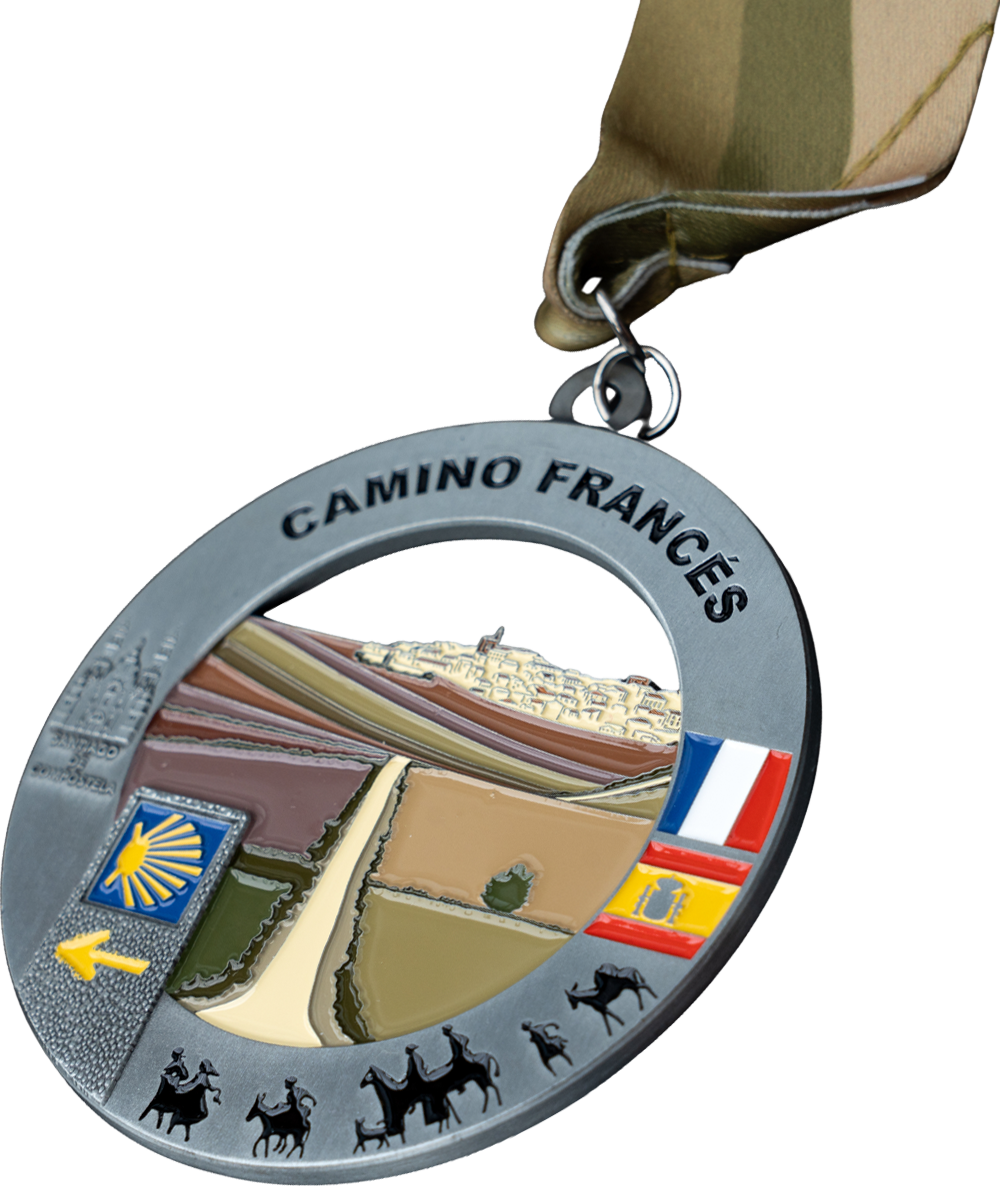
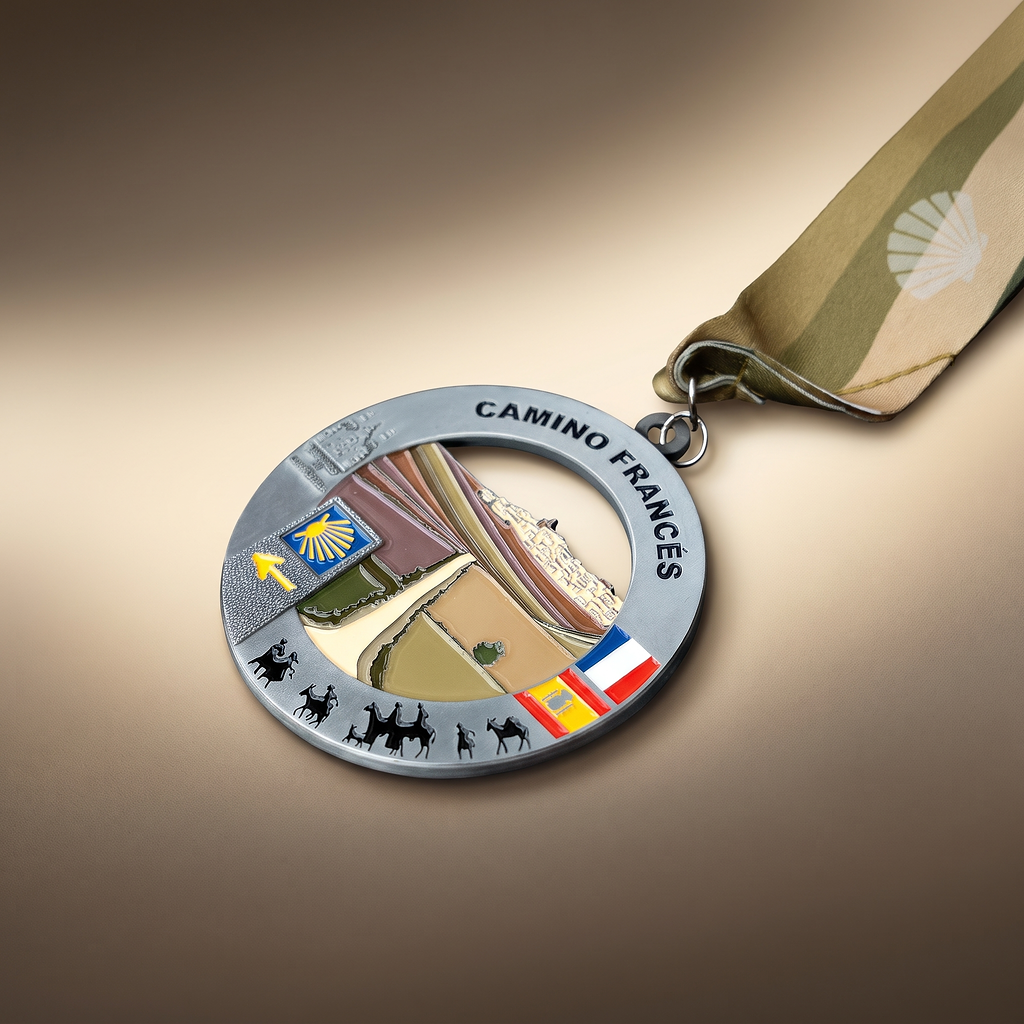
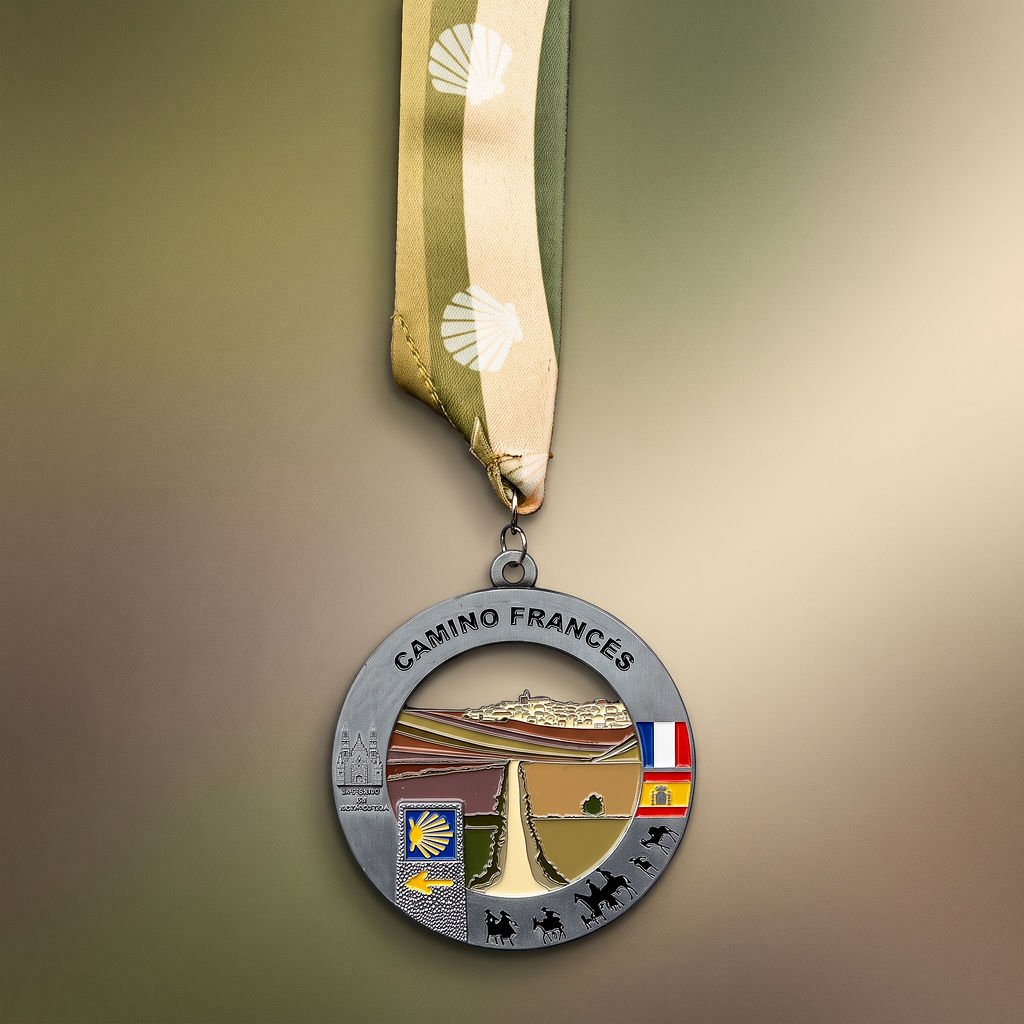
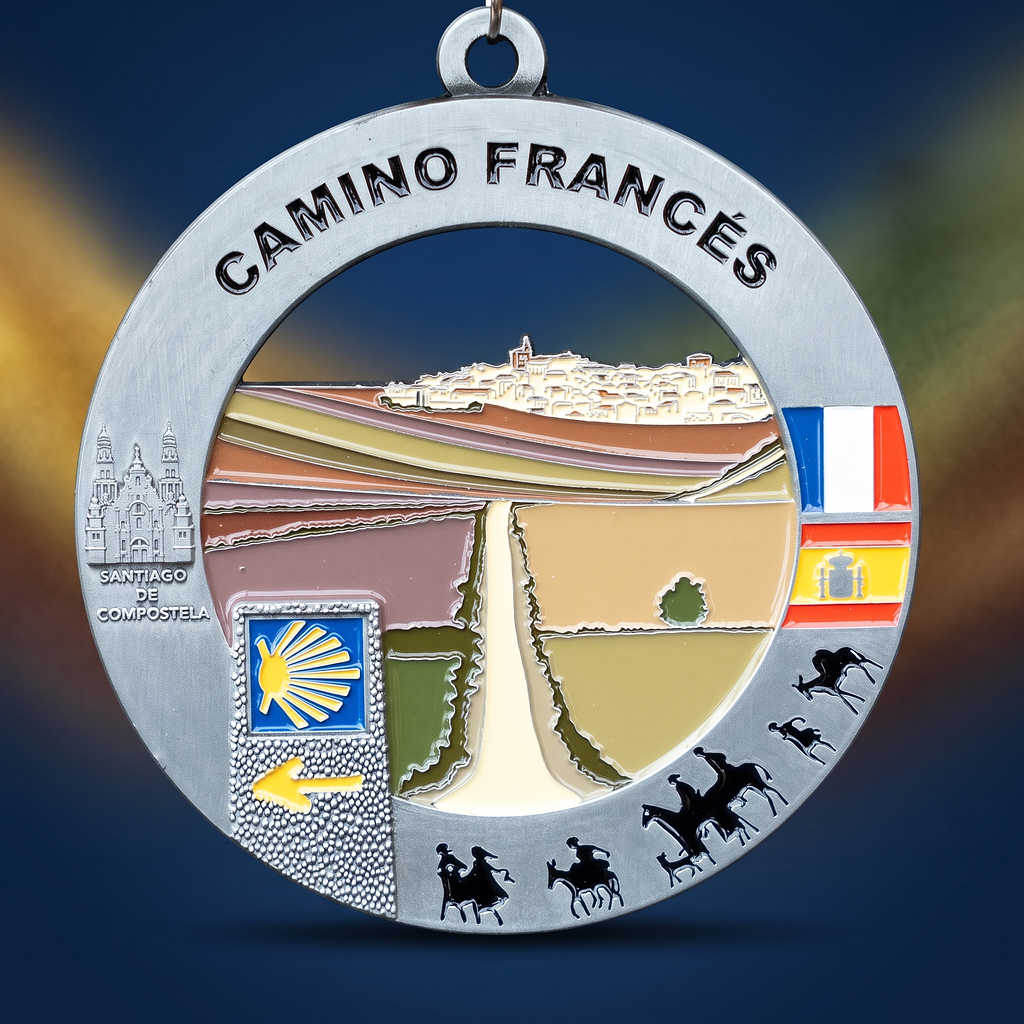
A pilgrimage of hundreds of kilometres deserves a lasting reminder. That is why a special Camino Francés Medal has been designed, dedicated entirely to this famous route to Santiago de Compostela.
What makes this medal special is that the design has been carefully created with inspiration from the Camino Francés itself. Elements of the route, the pilgrim tradition and the journey to Santiago come together in one unique memento. As a result, it is not just a medal, but a tangible reminder of all the steps, encounters and experiences along the way.
Specifications
- Material: High-Quality Zinc Alloy
- Diameter: 3.2 inch (8.2 cm)
- Weight: Approximately 100 grams
- Ribbon Width: 1.5 inch 3.8 cm
- Finish: Solid, detailed round design with a sturdy feel
- Personalization: Name, Camino route and travel date
Exclusively Available
The Camino Francés Medal is exclusively available at two locations:
- At the Pilgrim Office in Santiago de Compostela, where many pilgrims receive their Compostela.
- Through our website.
Make Your Medal Personal
When you order the medal through our website, you also have the opportunity to personalise it. For example, you can add a name, date or personal message. This makes the medal not only a reminder of the Camino, but also a unique and personal memento of your own pilgrimage journey.
A Lasting Reminder of a Special Achievement
For many pilgrims, arriving in Santiago de Compostela marks the end of an unforgettable journey. The Camino Francés Medal helps keep those memories alive. Whether you completed the route for sporting, cultural, religious or personal reasons, this medal symbolises the special achievement of completing one of the most iconic walking routes in the world.
A beautiful reminder for yourself, but also a special gift for a friend, family member or fellow pilgrim who has completed the Camino Francés.
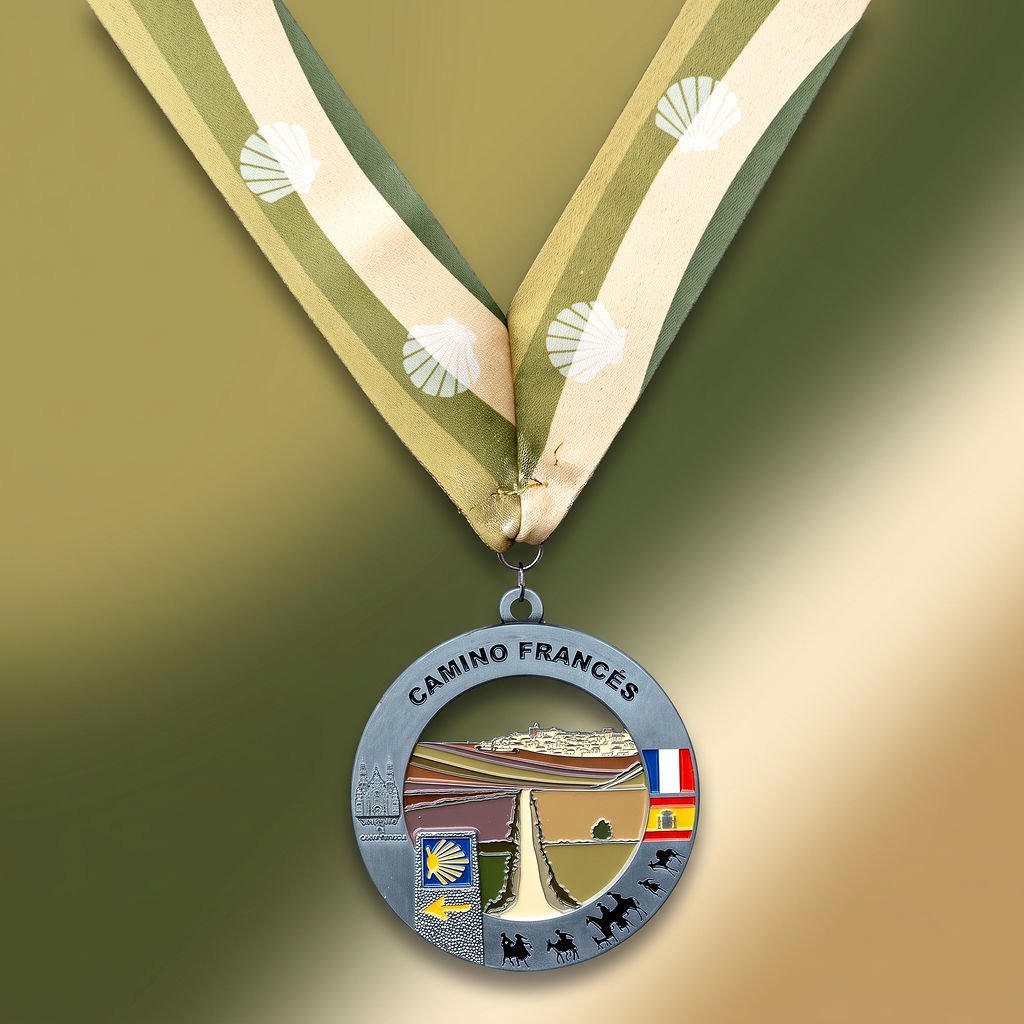
Personalize
Make your medal truly yours. Engrave your name, route, and journey dates to give your Camino memory a personal story you’ll carry with you forever.